.png)
How Advanced Dental Technology Transforms Your Smile Results
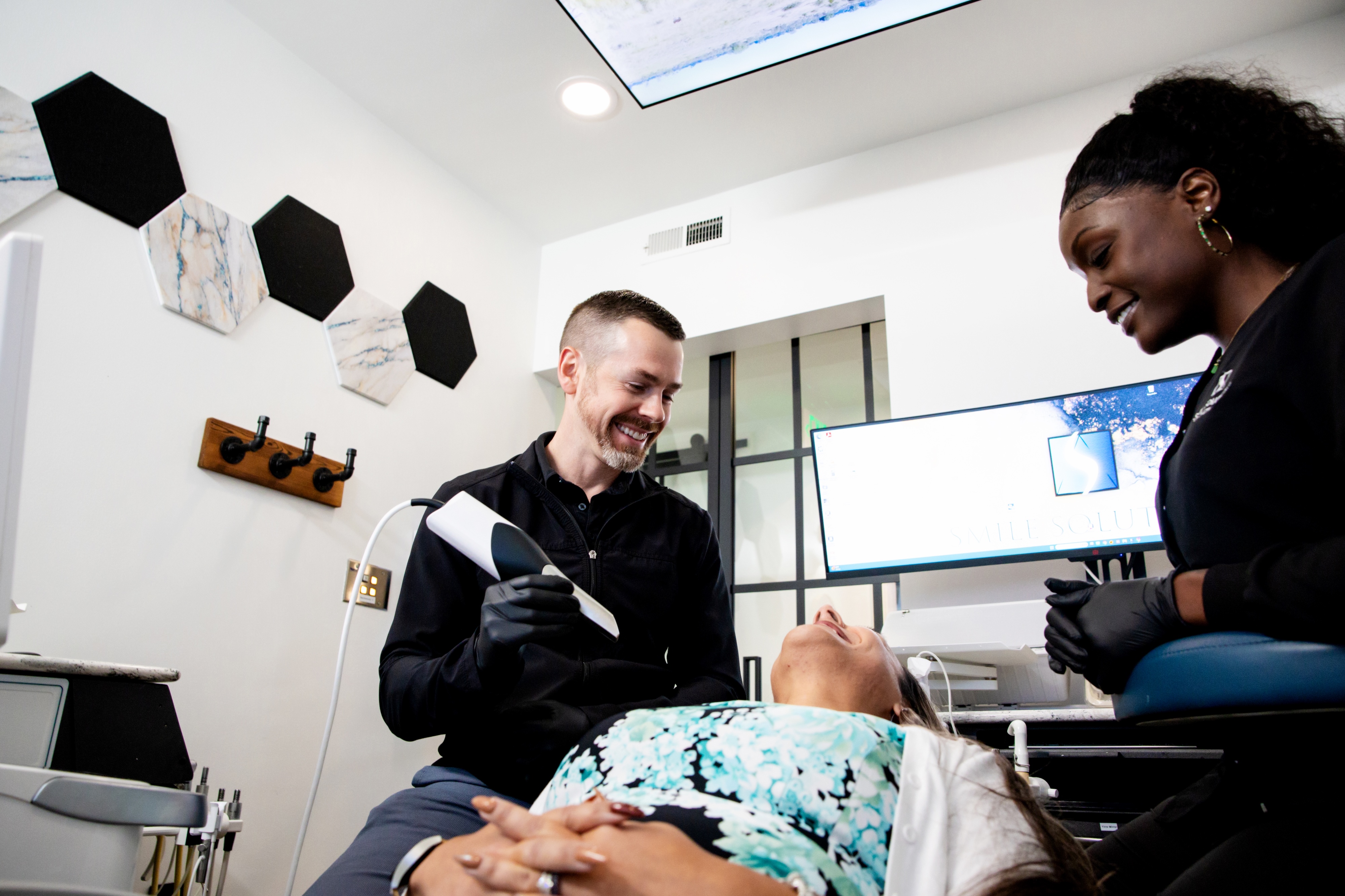
That Pinterest-perfect smile you've been dreaming about? It's no longer a matter of luck, artistic guesswork, or multiple trial-and-error appointments. Modern dental technology has fundamentally changed what's possible in cosmetic dentistry, turning smile transformations from unpredictable art into precise science. We can now show you exactly how your new smile will look before we ever touch your teeth, craft restorations that fit like puzzle pieces, and complete complex procedures with accuracy that would have seemed impossible just a decade ago.
Understanding how these technological innovations enhance cosmetic outcomes helps you make informed decisions about your smile transformation journey. Whether you're considering veneers, crowns, or a complete makeover, the integration of digital tools and advanced techniques is fundamentally changing what's achievable in modern dentistry.
Traditional dentistry relied on flat X-rays and educated guesswork; today's 3D imaging is like having X-ray vision with perfect clarity. Cone beam computed tomography (CBCT) provides detailed three-dimensional images of your teeth, jaw, and surrounding structures. Think of it as Google Earth for your mouth, we can zoom in, rotate views, and examine every angle before planning your treatment.
This comprehensive view allows us to plan treatments with unprecedented precision. We identify potential challenges before they arise, optimize aesthetic outcomes, and eliminate the surprises that used to plague cosmetic procedures. The technology enables virtual treatment planning, where we digitally design your new smile before any work begins.
Digital smile design transforms the consultation experience entirely. Rather than trying to describe your desired outcome or hoping we interpret your vision correctly, you actually see a preview of your transformed smile. This visualization ensures the final result aligns perfectly with your expectations; the technology also allows for real-time adjustments to the treatment plan, ensuring optimal results before any irreversible procedures begin.
The benefits extend far beyond simple diagnosis:
Computer-Aided Design and Computer-Aided Manufacturing (CAD/CAM) technology represents the difference between hand-carved sculptures and laser-cut precision. Traditional methods require multiple appointments, uncomfortable impression materials, and reliance on external laboratories that may not fully understand our vision for your smile.
CEREC same-day crown technology exemplifies this revolution. We can design, mill, and place permanent crowns in a single appointment—no temporaries, no second visits, no weeks of waiting. The process begins with digital impressions taken using an intraoral camera (think high-tech wand instead of goopy impression material). The crown is then designed using sophisticated software that considers both functional and aesthetic factors.
The advantages of in-office CAD/CAM systems include:
However, it's important to understand the limitations as well. The initial investment in equipment means higher overhead costs, and the technology requires extensive training to master. Additionally, while same-day crowns excel for most situations, complex cases may still benefit from the specialized expertise of master ceramists in traditional laboratories.
The precision achievable through CAD/CAM technology is like comparing a Swiss watch to a sundial. Digital manufacturing eliminates human error in the fabrication process, resulting in restorations that fit more accurately and require fewer adjustments. This precision translates to better long-term outcomes, reduced sensitivity, and improved aesthetics. Our comprehensive dental services incorporate these advanced manufacturing techniques to ensure optimal results for every patient.
The question isn't whether digital smile makeovers are more accurate than traditional methods, it's how dramatically more accurate they are. Digital workflows provide multiple layers of verification and quality control that simply aren't possible with conventional techniques. Every step of the process, from initial planning to final placement, is guided by precise digital data rather than approximation.
Digital smile makeovers begin with comprehensive 3D imaging and intraoral scanning. This data creates a virtual treatment plan that accounts for facial aesthetics, bite function, and individual preferences. The digital workflow allows for multiple iterations and refinements before any permanent changes are made to your teeth—like editing a document before printing the final version.
The manufacturing process achieves micron-level precision through 3D printing technology. Surgical guides, temporary restorations, and even complete dentures are produced with accuracy that ensures perfect fit and optimal function from the moment they're placed. This precision eliminates the trial-and-error adjustments that used to characterize cosmetic procedures.
Invisalign's digital treatment planning represents orthodontic precision taken to its logical extreme. The system uses advanced algorithms to predict tooth movement and create a series of custom aligners that gradually guide teeth into their ideal positions. The digital treatment plan shows the entire progression of movement; both patient and doctor can visualize the final outcome before treatment begins.
The accuracy has been validated through millions of cases worldwide. The system's ability to predict and control tooth movement has made it possible to treat increasingly complex cases with clear aligners, often achieving results that rival traditional orthodontic methods.
Laser dentistry has transformed soft tissue procedures from crude cutting to surgical artistry. When comparing laser technology to traditional scalpels for gum contouring, the difference is like comparing a precision instrument to a butter knife. Laser procedures are more precise, cause less trauma to surrounding tissues, and typically result in faster healing times.
CO2 lasers provide exceptional precision for soft tissue procedures. The laser energy seals blood vessels as it cuts, reducing bleeding and post-operative discomfort significantly. This precision allows for more conservative treatment approaches and better aesthetic outcomes. Patients often experience minimal swelling and can return to normal activities much sooner than with traditional surgical methods.
The advantages of laser technology for cosmetic procedures include:
Diode lasers offer additional versatility for periodontal treatments and minor soft tissue adjustments. These tools can handle everything from bacterial reduction to tissue recontouring, making them invaluable in comprehensive smile makeovers. The precision and control enable us to achieve results that would be difficult or impossible with conventional instruments.
Concerns about dental technology safety are understandable—after all, these innovations are relatively new. However, the safety profile of modern dental technology is excellent, with rigorous testing and regulatory oversight ensuring patient protection at every level.
Digital imaging systems, including cone beam CT scanners, use significantly less radiation than traditional medical CT scans while providing superior diagnostic information. The radiation exposure from a full-mouth CBCT scan is comparable to a few days of natural background radiation—far less than a cross-country flight. The benefits of improved diagnosis and treatment planning far outweigh this minimal exposure.
Safety protocols for modern dental technology include:
The digital workflow actually reduces exposure to potentially harmful chemicals used in traditional impression materials and laboratory processes. CAD/CAM systems and 3D printing technologies use biocompatible materials that have been extensively tested for long-term safety in oral environments.
The cost comparison between digital and conventional smile makeovers reveals a complex picture that depends on multiple factors. While the initial investment in digital technology is substantial, the long-term benefits often result in cost savings for both practitioners and patients.
Digital workflows can reduce the number of appointments required for complex treatments, saving you time and reducing overall treatment costs. Same-day procedures eliminate the need for temporary restorations and multiple visits; digital impressions reduce the likelihood of remakes due to impression errors that plague traditional methods.
However, cutting-edge technology requires significant investment in equipment, training, and ongoing maintenance. This investment is reflected in treatment fees, but the improved outcomes and patient experience often justify the additional cost. When considering the total value proposition—including time savings, improved comfort, and superior results—digital dentistry frequently provides better value than conventional approaches.
Cost considerations for digital vs traditional approaches:
Our investment in advanced technology allows for in-house control of the entire smile makeover process, often resulting in cost efficiencies that we can pass on to patients. Our new patient experience includes a comprehensive evaluation of how these technologies can benefit your specific situation.
The latest dental innovations improving smile makeover results continue to evolve rapidly. Artificial intelligence is beginning to play a role in treatment planning, helping to optimize aesthetic outcomes based on facial analysis and patient preferences. Advanced materials science is producing stronger, more natural-looking restorative materials that can be precisely color-matched and shaped.
The integration of different technologies is advancing even more rapidly. Combining 3D imaging with virtual reality allows patients to experience their new smile in a fully immersive environment before treatment begins. This level of visualization helps ensure complete satisfaction with the planned outcome before any work begins.
Biocompatible 3D printing materials are expanding the range of applications for in-office manufacturing. Soon, it may be possible to print not just temporary restorations and surgical guides, but permanent crowns, bridges, and even partial dentures with the same precision currently achieved with traditional CAD/CAM milling.
The future of cosmetic dentistry lies in increasingly personalized treatment approaches. Advanced imaging and analysis software can now account for individual facial features, lip dynamics, and even personality traits when designing smiles. This level of customization ensures that each smile transformation is uniquely suited to the individual patient—not a one-size-fits-all approach.
We understand that every smile is unique, which is why we've invested in the most advanced technology available. To learn more about our approach and meet our experienced team, we encourage you to explore how modern dental technology can transform your smile with unprecedented precision and predictability.
The integration of advanced dental technology into cosmetic dentistry has fundamentally changed what's possible in smile transformations. From the precision of 3D imaging and digital planning to the convenience of same-day restorations, these innovations are delivering better outcomes with improved patient comfort and satisfaction.
While the investment in cutting-edge technology represents a significant commitment, the benefits—including improved accuracy, reduced treatment time, and superior aesthetic results—make it worthwhile for both practitioners and patients. As technology continues to evolve, we can expect even more exciting developments that will further enhance the smile transformation process.
For patients considering a smile makeover, understanding these technological advances can help inform treatment decisions and set appropriate expectations. The key is finding a practitioner who has invested in the right technology and has the expertise to use it effectively. To discover what makes our approach unique and how we can help you achieve your dream smile, we invite you to experience the difference that advanced dental technology can make in your smile transformation journey.

